How to Know if My Tree Is Compromised? | South Shore MA Tree Safety Guide
November 20, 2025
How to Know if My Tree Is Compromised?
Homeowners across the South Shore of Massachusetts deal with everything from coastal storms to heavy winds and sandy soil—conditions that can weaken a tree without you realizing it. A compromised tree can become a major safety hazard, especially during nor’easters or when the ground becomes saturated after long periods of rain.
At Colonial Tree Service, we help South Shore residents identify unsafe trees before they cause damage. Here are the most important signs to look for if you’re wondering whether your tree is compromised.
1. Cracks, Splits, or Cavities in the Trunk
Visible trunk damage is one of the biggest warnings that a tree may be failing.
Common signs include long vertical cracks, deep splits or open cavities, hollow-sounding wood, and peeling or missing bark. Trees across the South Shore often develop trunk cracks after harsh winters or strong coastal winds.
2. Dead or Dying Branches
Dead branches are a major hazard, especially near driveways, roofs, or walkways. Watch for branches with no leaves, brittle twigs that snap easily, or large canopy sections thinning out. Removing dead limbs early prevents them from falling during storms, which is a common problem in South Shore neighborhoods.
3. Fungal Growth or Decay at the Base
Mushrooms or fungal conks around the base of the tree almost always indicate internal decay. You may see shelf fungus, mushroom clusters, or soft, spongy wood near the soil line. Because parts of the South Shore have moist, shaded areas, fungal decay is a frequent cause of compromised trees.
4. Leaning or Sudden Tree Movement
A tree that suddenly leans is a serious sign of root failure. Warning signs include a new or increasing lean, soil lifting on one side, exposed roots, or cracking ground at the base. Leaning trees are especially risky in coastal towns where high winds can worsen an already unstable structure.
5. Root Damage or Soil Disturbance
Roots are the anchor of the tree. When they’re damaged, the entire tree becomes unstable—even if it looks healthy. Common causes across the South Shore include construction, driveway work, heavy equipment on the root zone, saturated ground after storms, and erosion. If the roots shift, the tree can fail without warning.
6. Insect Activity
Weak or stressed trees attract pests. Signs of infestation include sawdust-like frass at the base, boring holes in the bark, woodpecker activity, and loose or peeling bark. Many South Shore oaks, pines, and maples show early decline from insects before homeowners notice anything else.
7. Bark Peeling or Missing Sections
If large areas of bark start falling off, the tree may be struggling internally. This can be caused by disease, sunscald, storm damage, or advanced decay. When 20% or more of the bark is missing, the tree is likely compromised.
Why Tree Safety Matters in South Shore MA
Compromised trees are especially dangerous in areas that experience coastal winds, nor’easters, heavy snow loads, sandy soil, and waterlogged ground. Homeowners on the South Shore regularly deal with tree failures after storms—many of which could have been prevented with early inspection.
When to Call a Professional
If you notice any of these signs, it's best to get a professional opinion. At Colonial Tree Service, we provide hazard tree assessments, trimming, removal, storm damage cleanup, and preventive maintenance. We serve the entire South Shore of Massachusetts and respond quickly when a tree looks unsafe.
Get Your Tree Evaluated Today
If you’re unsure about the condition of your tree, Colonial Tree Service can help. We offer reliable, local, and professional tree assessments to keep your property safe year-round.
Contact Colonial Tree Service
for South Shore tree service you can trust.
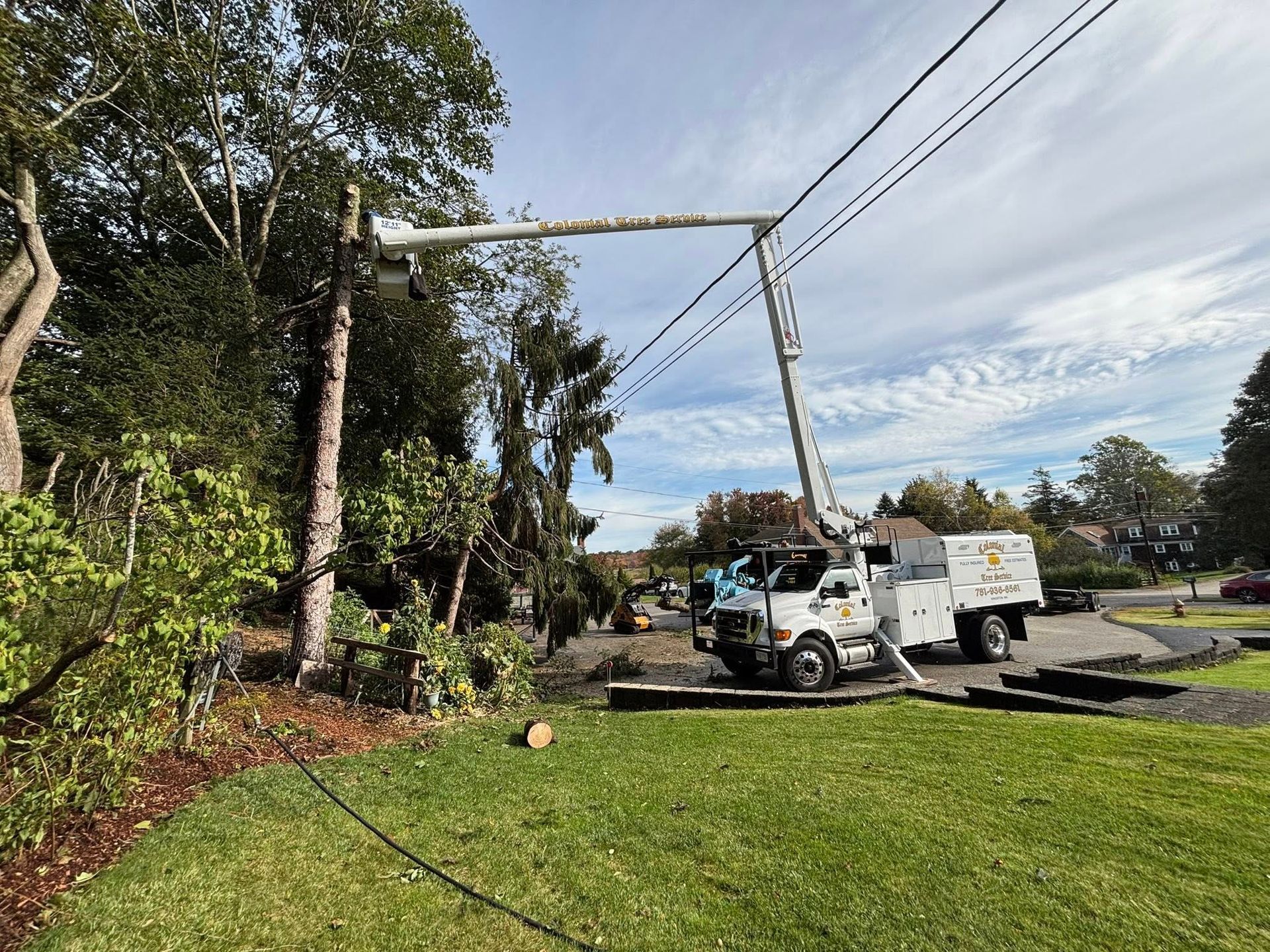
Learn how to spot hazardous trees in Duxbury before winter storms. Colonial Tree Service offers expert tips on identifying dead, damaged, or risky trees.
Share On: